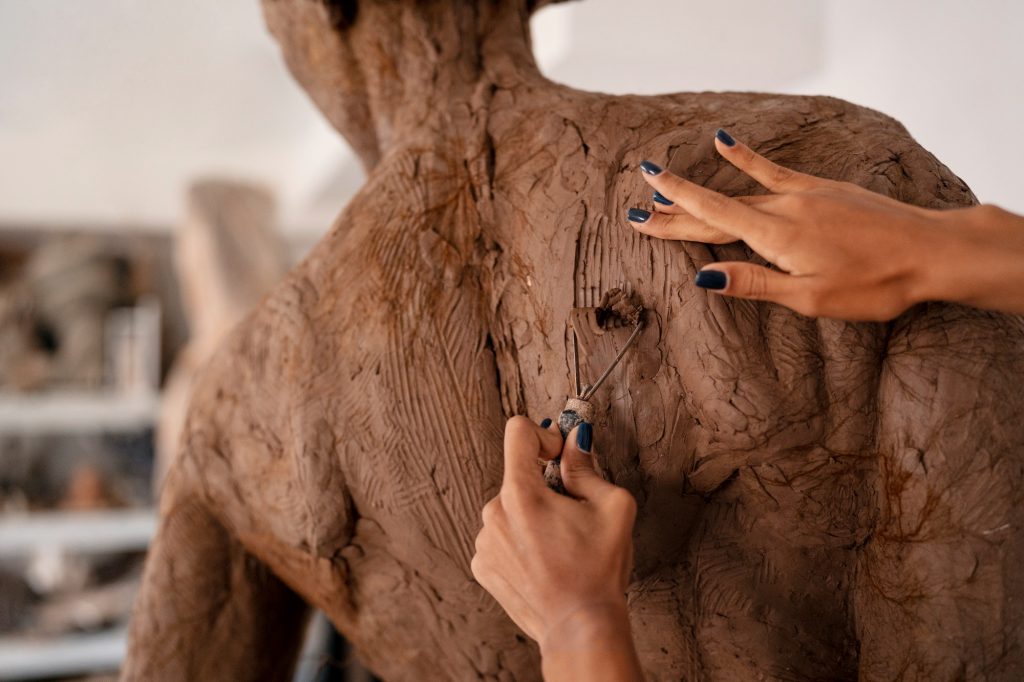
When you lack contentment within, it becomes difficult to view your external appearance in a positive light.
Image by Andrea Piacquadio on pexels
Every individual on earth has something about themselves they feel could be improved — myself included.
The key thing to remember is that none of us are perfect.
We all have our flaws and shortcomings, but we equally have the same opportunity to maximise on our uniqueness and flourish in our authenticity.
Image by freepik
Progress Over Perfection
As we often seen, many individuals will strive to attain physical perfection through external means.
No matter how many surgical procedures or beauty treatments a person undergoes, their perception of their own beauty will still be closely tied to their perception of self.
The perceived flaws we wish to ‘fix’ are typically tied to our past, influenced by what others have said, the impact of mainstream media, and our own negative beliefs about ourselves that we may have developed over time.
Image by freepik
When we fall prey to these influences, it becomes almost impossible to achieve a genuine sense of self-contentment.
We end up striving for something that doesn’t exist.
Doing so naturally builds our self-confidence, shifting our perception while enhancing our wellbeing overall.
Image by freepik
We all have our own insecurities, whether it’s being too short or too tall, being too slim or too big, bald or too hairy, having a wide nose or big feet and so on.
There’s something that bothers us all.
Image by Tima Miroshnichenko on pexels
Instead of striving for perfection, we should focus on achieving self-fulfilment.
This will see us reach a place where we develop in confidence despite the distractions of external influences.
It’s about learning to rely on what we determine for ourselves, rather than what has been projected onto us externally.
Image by freepik
Own Yourself, Free Yourself
We are who we are, not by coincidence, but by happenstance.
We can choose to feel upset, sad, or discouraged by our shortcomings, but my own experience has taught me that such perspectives add no real value to our lives.
I used to resent the fact that I was born with a facial deformity.
Whether in person or on screen, I was always conscious that it would be the first thing people noticed, and for many years that led me to hide and minimise myself.
Image by Pixabay on pexels
Later however, I realised I actually had a lot to be grateful for.
Reflecting on my past hospital visits, I remember seeing many children facing far more serious conditions.
Image by cottonbro studio on pexels
Whatever it is that we dislike about ourselves, we must remember that there is always someone dealing with something far more challenging.
This isn’t to minimise our concerns, but to help us view our situation from a different perspective because whether we believe it or not, there are people who would gladly trade places with us.
Image by Timur Weber on pexels
Practicing gratitude simply allows us to step into a mindset where we can appreciate our position in the way others might if given the chance.
It helps us learn to recognise the value in what we have.
Image by rawpixel.com on freepik
I once heard a speaker say, “The one-eyed man is king among the blind.”
My point in stating it isn’t to encourage comparison, but rather to emphasise the importance of perspective and gratitude.
Be truly thankful for what you have, but always work intently with what you’ve got because there are thousands who would prefer your circumstances over their own.
Image by freepik
From Burden to Brilliance
My deformity is still present, but how I see it has changed.
Investing in my personal growth and building my self-confidence sparked a shift in perspective.
Recognising how much God loves me taught me to love myself too.
Image by Polina Kovaleva on pexels
The things I could improve, I’ve continued working on as shared here.
What was once my greatest physical insecurity, has become a major source of inspiration.
I’m a living testament that even with the things you may see as flaws, you are still beautiful or handsome — you just need to believe it, act on it, and others will begin to see it too.
Image by pikisuperstar on freepik
When you’re secure in yourself and you’ve built a strong system of beliefs, it becomes difficult for others to see you any other way.
Self-assurance is contagious.
Image by Luiz Woellner Fotografia on pexels
Summary
So today, I encourage you; don’t strive to be perfect.
Instead, focus on building confidence in your authenticity by working on what you can, and accepting and being grateful for the things you can’t.
Everything about you makes you who you are – learn to embrace it.
Image by David Eluwole on pexels
Once you truly see your own beauty, so will everyone else.
Relieve yourself of the pressure to attain the unattainable, because to be human is to be imperfectly perfect.
But now, O Lord, thou art our father; we are the clay, and thou our potter; and we all are the work of thy hand Isaiah 64:8