Perhaps you’re holding yourself back from pursuing something you’re passionate about due to the fear of being in the spotlight.
That same fear prevented me from making any real progress from 2014 until 2022, when I finally decided to start filming.
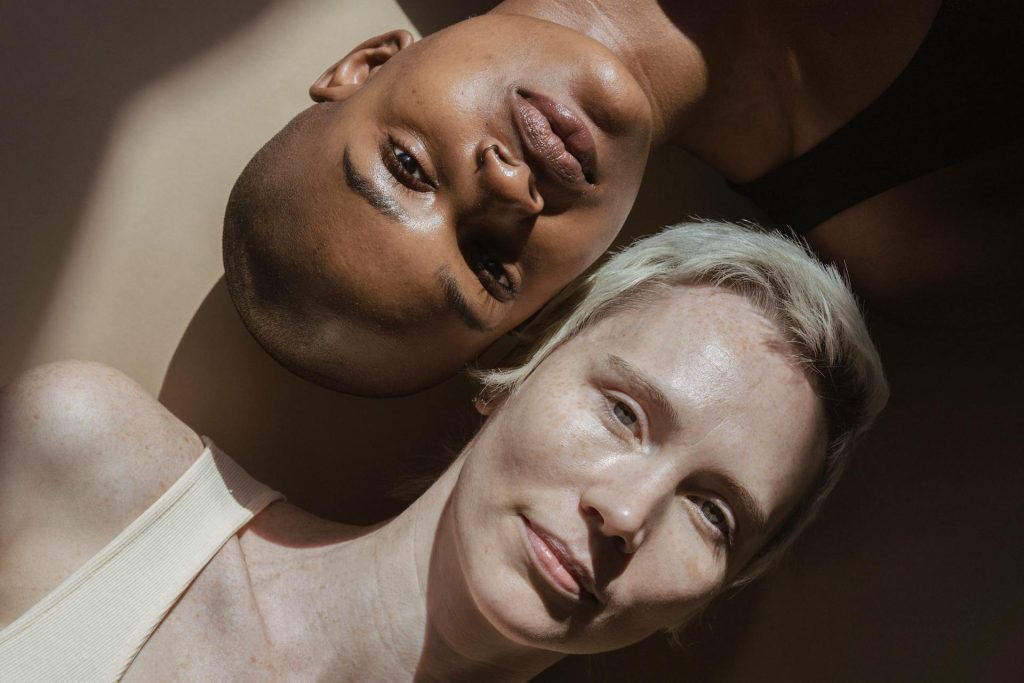
Image by kaboompics.com on pexels
Low self-esteem may also affect how you feel in your job.
For example, if your role involves interaction with others, increased exposure may heighten your awareness of your insecurities.
Image by KamranAydinov on magnific
The way we feel about ourselves can be contagious.
When we lack confidence, we subconsciously project that energy which others can sense.
Although we shouldn’t, people often judge based on what they see, meaning how we view ourselves can shape how others perceive us.
Image by drazen zigic/freepik
Setting The Tone
Have you ever met someone and formed an initial negative impression of them?
Yet, as you spoke to them and got to know them better, you began to warm to them and almost subconsciously, your perception of their physical appearance improved?
I’ve always found this fascinating.
Image by mego-studio on magnific
What it showed me is that beauty does lie in the eye of the beholder.
However, what the beholder sees is fashioned and influenced by a person’s energy and perception of themselves.
When I believed I was unattractive, everything about my body language and overall presence reflected the same.
I sensed that others could feel it even if they didn’t say it out loud — my own nervousness often made them uneasy too.
Image by pvproductions on magnific
The formula hasn’t changed.
People predominantly see me the way I see myself.
What has changed, however, is how I view myself and in turn, the way others interact with me has taken a noticeable shift compared to my past.
Image by freepik
The Balance in Acceptance & Growth
In my post ‘Taking Yourself Seriously’, I reflected on a time when I was seriously overweight and chose to embrace it.
I later realised that my personal approach to this also created a misplaced confidence that enabled my own stagnation.
Image by magnific
Self-love is essential, and I stand by that.
However, if we recognise areas in our lives that need improvement for the sake of our health and wellbeing, we should always act on it.
Doing so, in turn, will greatly strengthen our levels of self-worth, reinforced by a deeper sense of integrity.
Image by racool_studio/freepik
In today’s world, if you have the financial means, and there’s something about your body you don’t like, you can choose to change it.
While this works for some, for many, it simply isn’t an option.
Image by Jakub Zerdzicki on pexels
I’ve watched several programmes exploring cosmetic surgery and the journeys of those who chose it.
What I found particularly interesting in some cases, is that many people who undergo these procedures often return for the same surgery or identify new issues they feel need attention.
Image by DC studio/freepik
Inner Battles, Outer Changes
Most of us will have seen the US TV show ‘Botched’.
The individuals featured often came in after undergoing previous procedures elsewhere that had gone wrong.
As such, they would seek the help of these specialist surgeons to correct the issues in the hopes of restoring their confidence.
In other cases, there are guests who already appear to have had multiple procedures, yet still feel there is more to improve.
Image by stefamerpik on magnific
Across both groups, I found the underlying theme was self-confidence, perception of self, or often a combination of the two.
For those seeking to fix a previously botched procedure, it deeply affected how they saw themselves.
For others who had already undergone multiple procedures, the underlying issue was much the same — their perception of self.
Image by pikisuperstar on magnific
When it comes to cosmetic surgery, I believe everyone has the right to make the choices they feel are best for them.
However, I will always advocate for it to be considered as a last resort.
I say this because when you’ve made the effort to try things on your own, your decision is less likely to be impulsive.
By that point, you will have given it serious thought and hopefully carried out thorough research.
Image by freepik
I’ve digressed slightly, but in essence, if you’re not happy with something, try to do what you can to improve on it yourself.
Similarly, you should embrace who you are but also value the person you become through that process of elevation.
Caring for our appearance isn’t about vanity.
Rather, it’s about investing in the value we place on ourselves and being responsible stewards for what God has given us.
Image by gpointstudio/freepik
Summary
There are many factors that contribute to confidence overall.
As mentioned earlier, body confidence and self-confidence often go hand in hand, so it’s important to strive to be the best version of ourselves for the sake of our wellbeing.
Image by rawpixel.com on magnific
When you love yourself, you take care of yourself.
And when you take care of yourself, how you feel about yourself improves.
It becomes a cycle, with each feeding into the other, but the foundation will always be rooted in our mindset and perception.
Image by freepik
Pay attention to the external, but the internal work is critically important.
Whether you’re already confident or still a work in progress, you must continuously speak life into yourself.
Even if you don’t believe it at first, act in faith by speaking and thinking it anyway and back it up with intentional action.
Over time, your belief will grow until it becomes real — then others will believe it too.